1916: Manwood’s Fallen in 1916
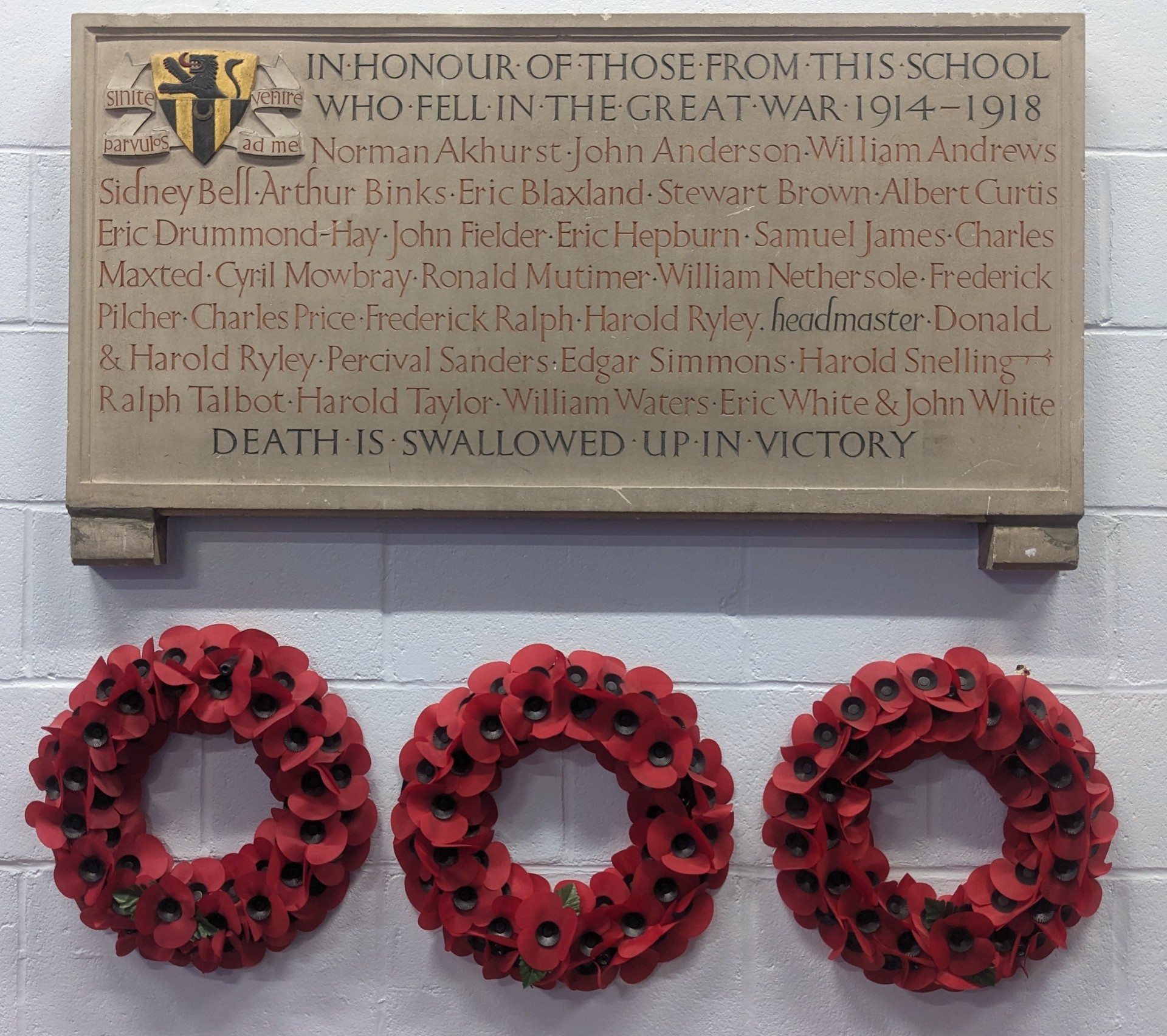
Six Manwoodians died in 1916, primarily at The Battle of The Somme - if you'd like some background about the battle then you can watch this video created by the Imperial War Museum by clicking here. You can read about the lives of those six Manwoodians and their experiences of war below.
Harold Measday Snelling
Manwood’s years: 1910 - 1913
Rank and Regiment(s): Acting Corporal in the Queen Victoria Rifles 9th Battalion of the London Regiment
Death: Killed in Action on 1st July 1916 aged 18 (needs to be confirmed via the census)
Commemorated: Thiepval Memorial. Pier and Face 9C and Sandwich War Memorial
There is no image of Harold Snelling
Harold was born in Ramsgate and lived for a time in Sandwich. While he is not the only Manwoodian to die at the Somme, he is the only one to have died on the notorious first day of 1st July 1916. On that day, 19.240 British soldiers died (out of 57,470 casualites – dead and wounded) and a British force of 120,000. You can read more about the Battle of the Somme by clicking here
The attack on Gommecourt
While the main attack was led by the Fourth Army, along a 15 mile front, whose northerly end was at Serre, Harold’s battalion was engaged in a major diversionary attack on that first day, known as the Gommecourt diversion, which involved the Third Army to the north of Serre. The aim was to draw fire and reserves away from the main attack to the south and get rid of the Gommercourt salient (the protruding part of the front line that allowed the Germans to use higher ground to command the land to the north and south). The commander of the Third Army, Sir Edmund Allenby, argued fiercely that his troops would suffer high casualties by drawing fire away from the main attack to the south, however the diversionary attack was authorised and Harold Snelling was amongst the 545 casualties in his battalion, by the end of the first day of the Battle of the Somme on 1st July 1916.
The Northern section of the front line at The Somme on 1st July 1916
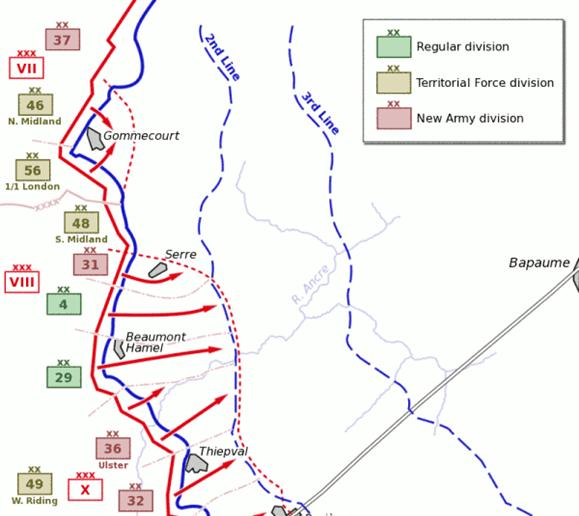
The diversionary attack on Gommecourt failed in achieving its aims. The German defences at Gommecourt were among the strongest any British attack faced on 1st July. The attack on the southern edge of the salient began promisingly. While the attack led by the 9th London found that the wire had not been cut properly and there were only a few gaps in it through which the attacking troops could pass. Whilst they waited they were hit by concentrated machine gun fire. Despite this some did make it through and into the German trenches. At this stage the German artillery opened up with full force, plastering no-man’s land and preventing supplies and reinforcements getting across. By now the German defenders had emerged from their deep dug outs and were pouring fire on the Londoners from their strongly held reserve trenches. Even so, some of the attacking force managed to push on to Nameless Farm road, a sunken road, but this is as far as they got. To show one’s head above the 4 ½ foot bank of the sunken road meant instant death. By midday the Londoners were running short of grenades and they were under strong bombing attacks which gradually forced them back. There was little help from the British artillery and the wounded began crawling back across no-man’s land. By 2pm they were still holding parts of the German first and second lines but their position was doomed. There was no further attack from 46th Division to the north of the Gommercourt salient. Nevertheless they continued to resist but by 4pm the Germans had retaken their second trench and had footings in the first. Before dark the Londoner’s numbers had been reduced to seventy holding a small part of Ferret Trench and at 9.30pm the last party made it back suffering badly en route.
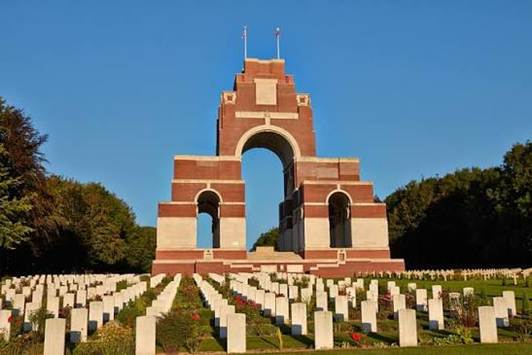
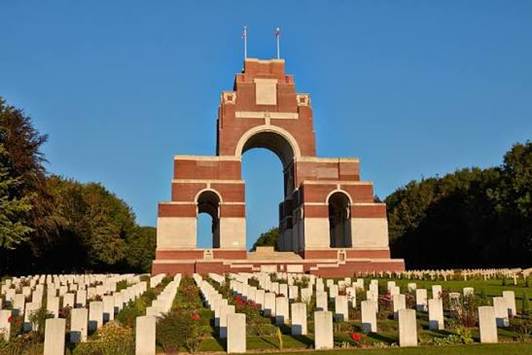
Quite when and where Harold Snelling died is unknown and his body cannot have been recovered as he is commemorated on the Thiepval Memorial (see image below), the memorial at the Somme, which bears the names of more than 72,000 officers and men of the United Kingdom and South African forces who died in the Somme sector before 20 March 1918 and have no known grave. Over 90% of those commemorated died between July and November 1916.
Click here to be taken to his Commonwealth War Graves Commission site
Charles Percival Maxted
Manwood’s years: 1907 - 1910
Rank and Regiment(s): Driver in the Canadian Engineers
Death: Died of wounds on 3rd August 1916 aged 24
Commemorated: Lijssentoek Military Cemetery, VII. D. 17A, Belgium
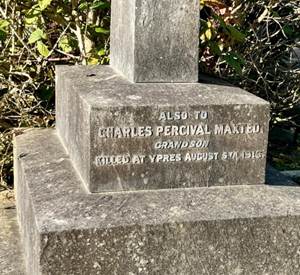
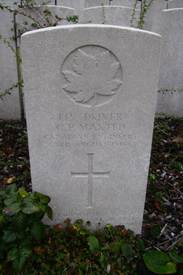
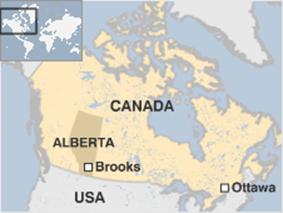
The records for Charles Maxted are spread far and wide, but one can start to piece together a little bit of his life from those different sources. He was born in Thanet to Charles and Adelaide Maxted, a farming family according to Canadian immigration documentation. That documentation shows that In April 1912, the family (parents and 5 children) arrived in Halifax, Nova Scotia on board a ship called the Tunisian. The records show that the family intended to farm in Canada and they moved Hoo Farm, Brooks, Alberta. Brooks is a prairie and cattle ranching town, that had only been established in 1910 (you can read more about the town by click here) so this was a family seeking a new start in the New World.
Only three years later, on May 8th 1915, Charles signed up to join the Canadian Overseas Expeditionary Force. We can probably assume that he was part of the Manwood’s OTC as the ‘attestation papers’ that he signed in Canada when he mentions being part of Officer Training in Sandwich. There is little to tell us about what his service during World War I, however an inscription on his grandfather’s grave (sourced from the War Memorials Register that you can see by clicking here) suggests that he died at Ypres, in a period of trench warfare, in between the main battles, which ties in with the location of his own grave (although the dates don’t quite match up).
Click here to be taken to his Commonwealth War Graves Commission site.
Click here to be taken to his Canadian Veterans site
Albert Howell Curtis, Assistant Master at SRMS
Manwood’s years: 1914 - 1916
Regiment(s): Private in the Royal Fusiliers
Death: Died of Wounds on 4th August 1916 aged 23
Commemorated: Varennes Military Ceremony , Somme and Sandwich War Memorial
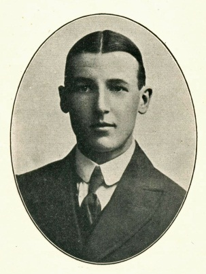 | 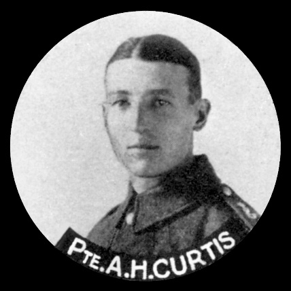 |
The Curtis family suffered a great tragedy during World War I. They had four sons and three of them were killed, with Albert being the second of the three brothers to die. Born in 1892 in Easton, Northants, he attended Stamford Grammar School, Lincolnshire. After three years teaching at Garford Parochial School in Northamptonshire, he was appointed Assistant Master at Sir Roger Manwood’s in 1914. Curtis taught Mathematics, Latin, Greek and Drawing, as well as assisting Games. He was also Cadet Officer for Manwood’s Officers’ Training Corps.
On the 5th April 1916 he left Manwood’s School to enlist in the 8th Battalion, City of London Regiment, Royal Fusiliers, with the rank of Private. Following a short three months’ training, Albert’s battalion took part in the Battle of the Somme. Albert’s battalion was one of the four battalions of his regiment which fought on the first day of the Somme on 1st July 1916. His battalion managed to gain ground, taking three German lines, however the casualties were high with over 640 casualties (dead and injured) from the 800 troops in the battalion. Albert’s battalion was relieved and moved to other parts of the front, eventually ending up at Pozieres Ridge where there was a German trench network named ‘4th Avenue’. The fighting in this network of trenches commenced at 23.00 on 3rd August and successfully concluded the next day and at some point during that time, Albert, along with 39 other members of his battalion was killed in the action, after just one month at the front. The 1916 edition of The Manwoodian records that Curtis was ‘We were deeply grieved to receive the news of the death of Mr. A. H. Curtis, of wounds received in France on the night of Aug. 3rd. A very brief notice has reached us about the details of his death, we know that he was severely wounded by a shell or trench mortar, whilst waiting in a trench all ready to attack. He was taken to the Dressing Station, but died on the following day.’ Curtis was buried at Varennes Military Cemetary, Somme. His two brothers, Horace and Herbert, were also killed in the war.
His obituary in The Manwoodian went on to say, ‘We can only say that the deepest sympathies of the whole School go out to his parents in this their loss of a second son. We all remember Mr. Curtis both in school and in the playing field. He was a fine athlete, and took a very great interest in the light side of school life. He had a keen sense of humour, and a quiet but penetrating wit. Those of us who knew his inner life could not but admire it. He had a deep and steadfast faith in his religion, and though he was always reserved in such matters, his influence made itself felt amongst us. HIs parents have lost a most devoted son; we have lost an example, a friend, and a gentleman. To the School he gave the best of his ability; to this country he gave his life.’
Click here to be taken to his Commonwealth War Graves Commission site.
Harold Buchanan Ryley (popularly known as Bay Ryley)
Manwood’s years: 1903 - 1905
Rank and Regiment(s): 2nd Lieutenant , North Staffordshire Regiment
Death: Killed in action on 5th September 1916 aged 20
Commemorated: Thiepval Memorial Pier and Face 14B and 14C and Emmanual School Memorial
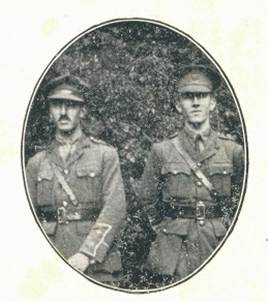
Harold Buchanan Ryley, popularly known as Bay, was the younger brother of Donald Ryley and youngest son of our former Headmaster, also called Harold Ryley. Bay Ryley had been educated at Manwood’s and then at the Emmanuel School in London (his father had been our headmaster before moving, in 1905, to the Emmanuel School). Bay Ryley was part of the Officer Training Corps at Emmanuel School and on 16 September 1914, he ‘requested that he may be appointed to a temporary commission in the Regular Army for the period of the war’. He was commissioned into the North Staffordshire Regiment and on 5th September 1916, he was killed whilst leading his men in an attack in Delville Wood, aged just 20. Delville Wood was one of the main sub battles of the Battle of the Somme, in which South African units led costly attacks on this section of high ground that was fought over from July to September 1916.
On 16 September 1916 the War Office addressed a telegram to his father at The Taft School, Watertown, Connecticut. ‘Deeply regret to inform you that 2 Lieut. H. B. Ryley North Staffordshire Regiment was killed in action September 5. The Army Council express their sympathy’. In The Times of the same date, there was a notice: ‘Killed in action on 7th Sept., while leading his men in an attack, Lieut. Harold Buchanan Ryley, of the North Staffordshire Regiment, son of the Rev. H. B. Ryley, and grandson of the Rev. G. Buchanan Ryley, Vicar of Whyteleafe, Surrey.’ However, The Reverend Ryley was no longer at the Taft School and the telegram couldn’t be delivered. On learning this, The War Office contacted Bay’s grandfather, the Reverend G.B. Ryley, who informed them of his son’s new address at Hotel Walton, De Funiak Springs, Florida. The news of his younger son’s death reached The Revered Harold Ryley in Florida and he must have been stunned by this news as his immediate reaction was to return to England and volunteer for active service.
Click here to be taken to his Commonwealth War Graves Commission site.
Percival Frank Sanders
Manwood’s years: 1899 - 1902
Rank and regiment(s): Private in the Canadian Infantry (Central Ontario Regiment), 58th Battalion
Death: Killed in action on 20th September 1916 aged 30
Commemorated: Courcelette British Cemetery, (Somme)
No image
Percival Sanders was born in Lea in London, but there are few other details other than he ended up in Canada (no immigration records can be found) and was working as an accountant when he volunteered to join the Canadian Infantry in May 1915. His regiment were deployed as part of the Battle of the Somme in 1916.
It is likely, given that he is commemorated at Courcelette Cemetery, that he was part of the heaving fighting that took place around the village of Courcelette in September 1916; an engagement that saw the first use of tanks. On the 15th September, the village was taken by the Canadians, supported by tanks, with the 4th and 6th Brigades storming the outer trenches and the sugar factory, and the 5th Brigade seizing the village.
Click here to be taken to his Commonwealth War Graves Commission site.
Click here to be taken to his Canadian Veterans site
Eric Joseph White
Manwood’s years: 1905 - 1908
Regiment(s): Lance corporal in the Grenadier Guards, 1st battalion
Death: Killed in Action on 25th September 1916 aged 22
Commemorated: Thiepval Memorial, Pier and Face 8D.
Eric is commemorated on Thiepval Memorial (see image below) the memorial to the Missing of the Somme, bears the names of more than 72,000 officers and men of the United Kingdom and South African forces who died in the Somme sector before 20 March 1918 and have no known grave. Over 90% of those commemorated died between July and November 1916.
Every so often, a family remembrance surface that sheds light on the life of one of our ‘fallen’. To commemorate the hundredth anniversary of World War I, the BBC undertook a project that allowed family members to share their stories (you can lick on the link here).
“My Grandfather attended Roger Manwood's Grammar School in Sandwich having won a scholarship. Then was in training for the post of town clerk at Ramsgate. His father was a fisherman and they lived at Elizaberth Terrace Mews behind Albion Place. Eric volunteered and was a sentry guard at Buckingham Palace living in the Chelsea Barracks. Aged 22 he was sent to France and had only been there for a short time when he was wounded. He was advised to walk to a field hospital for treatment and told not to walk through Abbeville Wood (Editor – there doesn’t appear to be an Abbeville Wood in that area, could it have been Delville Wood?). He ignored the advice went into the wood and was blown up by a mine planted by the Germans. No remains. This was the 25th September l9l6. On the 10th December his son Eric Leslie John Wilfred White was born to his wife Hilda. Hilda searched the hospitals for her husband but eventually received confirmation of his death and his war medals. All his life his son mourned the father he'd never known. On the 25th September 2008 I visited the Thiepval Memorial and Abbeville. The first person of his family to do so - no-one knew his name was on the memorial until I found it this year through the war graves commission. I am his grandaughter born on V.J. Day. I laid a wreath of Kentish Hops in his memory, a red silk poppy and a photo of his son who became a Flt/Lt. in the Royal Air Force.It was a most emotional and moving experience and I am so glad that I went.”
Click here to be taken to his Commonwealth War Graves Commission site.